News
Travel letter from Kautokeino


Our days in Kautokeino reminded us that education is about more than curricula and lesson plans. It is also about language, identity, and the right to define our own knowledge and tell our own stories
The two-hour drive between Alta and Kautokeino became unexpectedly entertaining when we discovered that our rental car seemed to come with only one built-in soundtrack, what sounded like a 2006 Disney Channel album. Instrumental version. On repeat. With no radio signal as an alternative.
After a quick trip from Tromsø and a somewhat longer journey from Oslo, we finally met in Alta. We are Emma and Nicole, two members of SAIH’s Decolonization Working Group. Coming from different backgrounds but sharing an interest in questions of knowledge, language, and identity, we set off for the Indigenous and Sámi Education Conference at the Sámi University of Applied Sciences in Kautokeino.
The conference gave us the opportunity to learn from people who have spent years working to develop education on Indigenous peoples’ own terms. Through presentations, conversations, and encounters, we were reminded that questions of knowledge are not only about what is taught, but also about who gets to decide what counts as knowledge in the first place.
We heard experiences from different parts of the world and saw how education can serve as a tool for strengthening languages, cultures, and knowledge systems. Gatherings like these are important because they show that different ways of organizing and understanding education are not only possible, but that they already exist.

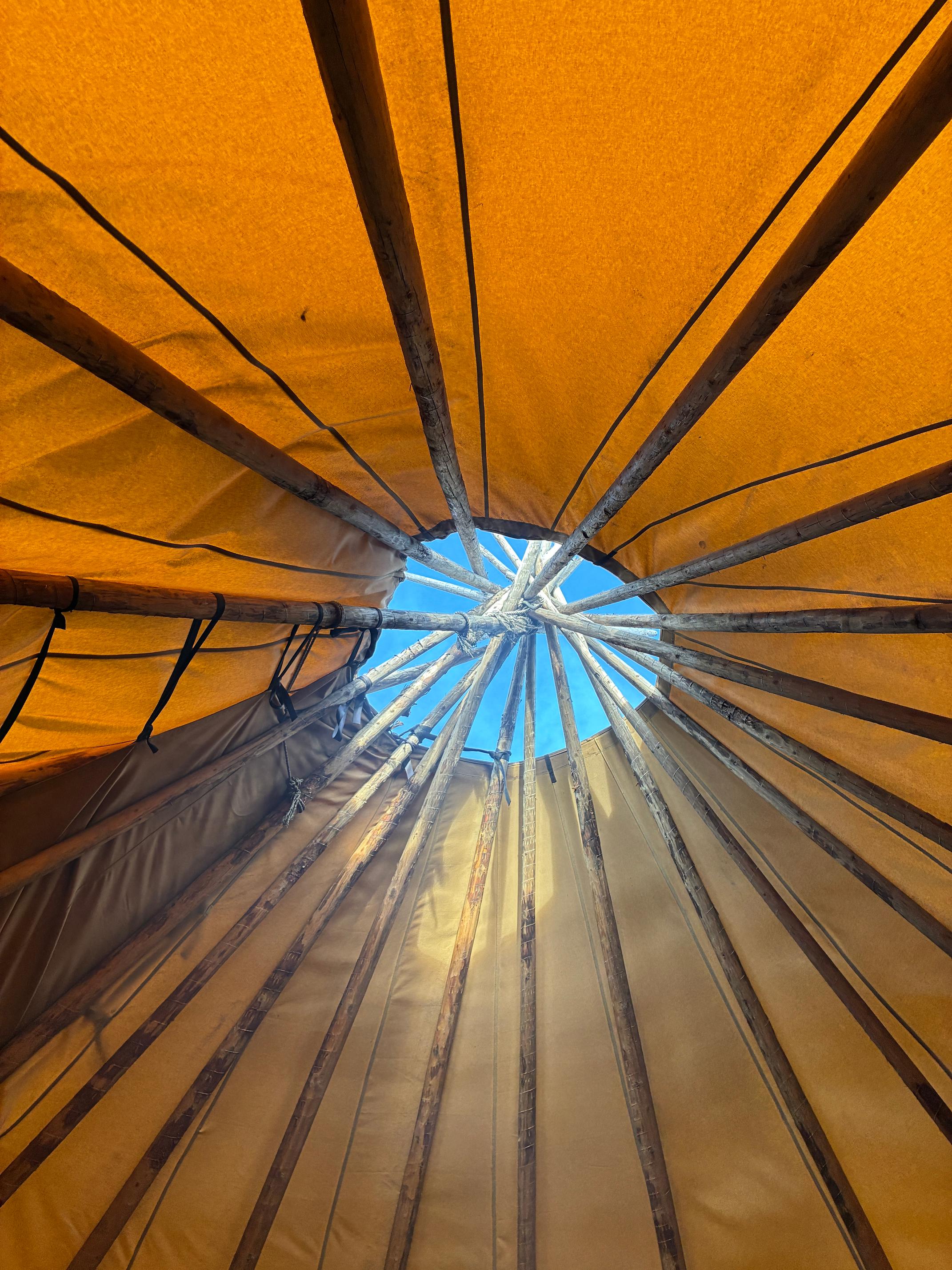
For Emma, many of the conversations resonated deeply. As a Sámi pupil and student, Sámi history, language, and knowledge were often largely absent from her educational journey. Being at a conference where Indigenous knowledge was not an add-on perspective, but the starting point itself, was therefore a powerful experience.
One of the themes that left the strongest impression on both of us was language. For Nicole, the discussions sparked reflections on growing up as a second-generation immigrant with a minority background. Although our experiences are different, we both recognized language as something far greater than words. Language carries stories, memories, values, and ways of understanding the world. The work of strengthening Indigenous languages is not only about the past. It is about who gets to define themselves, tell their own stories, and pass on knowledge to future generations

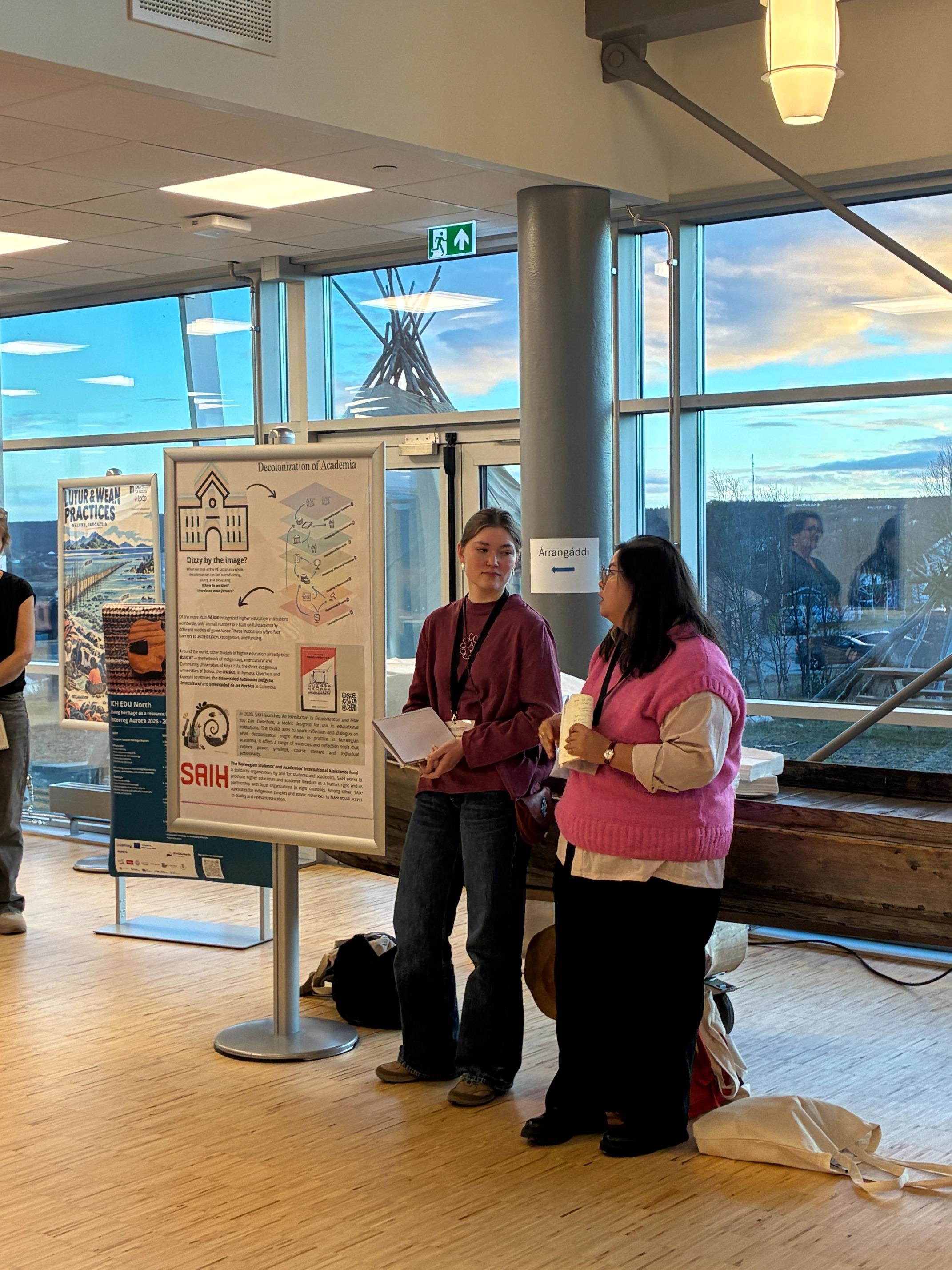
Kautokeino reminded us that education on Indigenous peoples’ own terms is about much more than institutions and policies. It is about people, stories, and community. That is something we will carry with us in our continued work within SAIH.
SAIH’s Decolonization Working Group
- Consists of students, academics, and activists.
- Works to develop a shared understanding of decolonization within SAIH and to facilitate dialogue, reflection, and knowledge-sharing.
- Interested in our work or potential collaboration? Get in touch with Vice President Nicole Becerra Vivanco at nicole.becerra@saih.no (nicole.becerra@saih.no).