Stories from our work
Stories from our work
Students building a common front in Southern Africa
2025
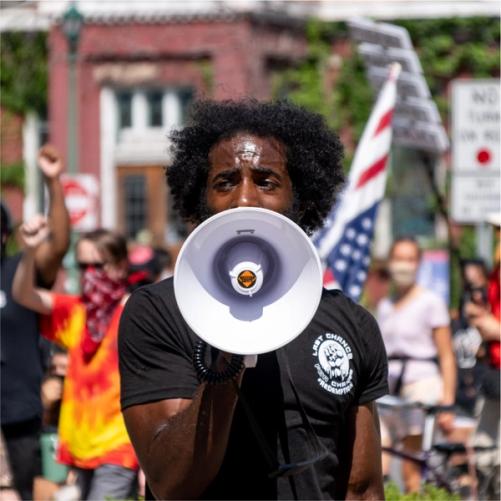
Being a student activist in Southern Africa can come at a high cost. Those who organize or challenge governments and university authorities risk expulsion, arrest, and “lawfare” — the strategic use of laws and disciplinary regulations to silence critical voices.


In countries like Zimbabwe and Eswatini, student leaders face surveillance, threats, and violence from police and security forces. At the same time, rising tuition fees and an increasingly commercialised higher education sector are pushing many young people out of higher education.
Being a student activist in eSwatini means constantly navigating pressure, fear, and resilience at the same time. You speak knowing there may be consequences, but you continue because silence would mean accepting injustice.
For student organisations, this creates double pressure: the struggle for fundamental rights — and the struggle to survive as organisations.
A regional force
To respond to these challenges, SAIH has supported the Student Academic Freedom Regional Advocacy Program (SAFRAP), a regional initiative coordinated by Youth Empowerment and Transformation Trust (YETT) in Zimbabwe.
The goal is clear: to strengthen student movements’ capacity, cooperation, and political influence across borders.
Through SAFRAP, student organisations receive:
- training in organisational development, leadership, and rights advocacy
- support to document violations of students’ rights
- spaces for exchange, learning, and solidarity among student leaders in the region
Being a member of a regional association has been a revolution; it turned us from an isolated state to a united one.
The return of a regional student voice
A key actor in this work is the Southern African Students’ Union (SASU), the umbrella organisation for student movements in the region. For several years, the organisation was largely inactive, marked by weak structures and irregular leadership transitions.
That changed in 2024.
With technical support from YETT, SASU underwent a comprehensive revitalisation. For the first time in many years, a congress was held, new leadership was elected, new statutes were adopted, and clearer financial procedures were established.
The result is an organisation that once again functions as a regional voice for students in Southern Africa.
From internal reform to political influence
In 2025, SASU has moved from strengthening its internal structures to active political advocacy.
The student movement is now working to:
- remove visa barriers for students in the region
- counter the commercialisation of higher education
- defend academic freedom
These issues affect hundreds of thousands of students — and rarely gain space in public debate without a strong, united student voice.
What gives me hope is the courage of students who refuse to be swayed by bribes or empty promises, and who continue to mobilize despite challenges.
Long-term support creates lasting results
The collaboration between SAIH, YETT, and SASU shows that investing in organisational development yields results over time. When student movements strengthen their structures, they are better equipped to defend rights, build solidarity, and influence political processes — even in challenging political contexts.
A stronger SASU means a stronger student voice across Southern Africa — not only today, but in the years to come.
More stories from our work


Stories from our work